Clare Valley Climate & Topography
Where land, sky, and seasons meet
Climate
Clare’s climate is Mediterranean with typically warm to hot summers and cool to cold winters.
While summer in the Clare Valley is technically warm, maritime breezes have a moderating effect, and there are often drastic temperature drops from day to night. This wide diurnal variation in daily temperature leads to slower and more even ripening, allowing us to make some of the best Rieslings in Australia and plush medium-bodied reds that age elegantly.
In the height of summer when the grapes are ripening, the average daily temperature is around 30°C to 35°C and the average night-time temperature is between 8°C and 13°C. In winter, the average daily temperature is 14°C and the average night-time temperature can drop as low is 1°C - 3°C.
The region has an annual rainfall of approximately 600 mm which occurs mostly in winter or spring. Summer thunderstorms provide welcome relief from the dry summers, providing vital soil moisture and filling the rain water tanks.
Spring frost can be an issue on low-lying vineyards, particularly on the eastern and southern fringes of the region and on some of the river flats to the northern end of the valley. Damage from hail is fortunately only very occasional and is generally considered a low risk. Although a rarity, there have been recorded snowfalls in the Clare region.
Prevailing wind directions are consistently south-west to north-west in the mornings but are highly variable, from the north, south, east or west, in the afternoons.
Aspect, slope & sunlight
Sunlight is an essential ingredient in the growth of both the vine and the grape and so the location of a vineyard relative to the sun (called “aspect”) is important.
In the Clare Valley, the warmest aspects are those facing north, north east and north west.
The westerly aspects are cool in the morning but are exposed to hot afternoon sun, whilst the southern aspects are the coolest.
Vines higher up a slope will receive more sunlight than those lower down a slope.
Typography
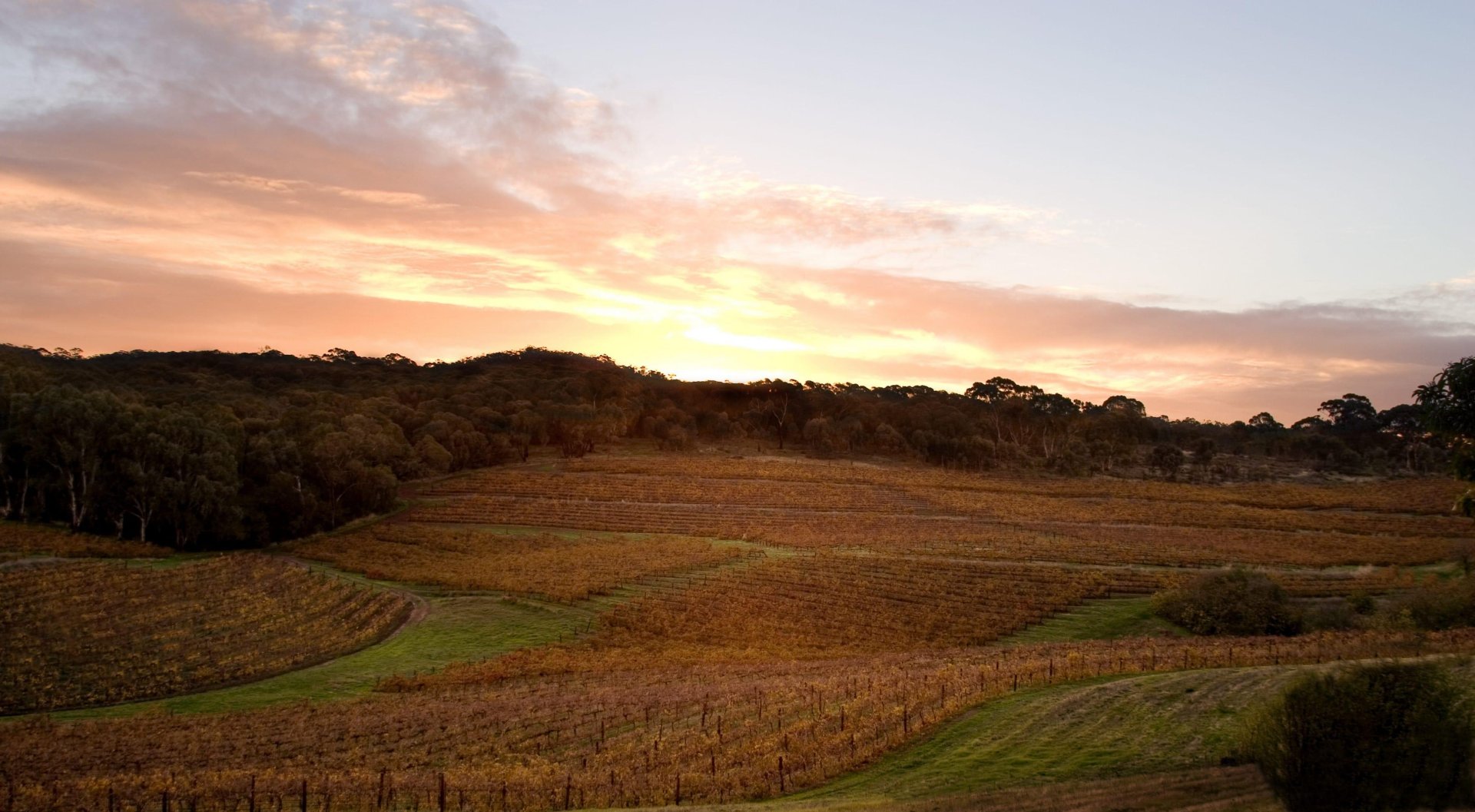
The Clare Valley is defined by its gently folded landscape of valleys, ridgelines, and rolling hills, set within the northern end of the Mount Lofty Ranges in the Mid-North region of South Australia.
Rather than a single flat plain, the region unfolds as a patchwork of elevations and aspects, creating a sense of openness, variety, and natural beauty. This diverse topography not only shapes the character of the valley but also offers expansive views, sheltered pockets, and a strong connection between land and sky.
The region has a higher altitude than most wine regions in South Australia with many vineyards situated at 400-500m above sea level. Varying altitudes to 608m (Mt Horrocks) cause wide diurnal temperature variation from summer’s day to night, ensuring cool nights, even in the heat of summer, allowing the fruit to ripen evenly and slowly. It is the secret as to why grapevines prosper in the Clare Valley and is our greatest asset in adapting to climate change.
While there are no legally-defined subregions in the Clare Valley, the topography naturally divides the region into smaller localities. Many wine lovers would be familiar with localities such as Auburn, Watervale, Sevenhill, Polish Hill River and Clare.